RSS

The $38 Billion Boom Already Underway in Prince George (And Why This Is the Best Buying Window in Years)

I've sold land and buildings in this region for over fifteen years, and I've never seen anything like what's lined up for the next five. A few weeks ago I sat down with every major project I could find in northern BC, the ones being built and the ones coming, and started adding up the dollars and the jobs. When I got to the bottom of the page I added it up again because I didn't believe it the first time.

Here's the short version. Thirty-three projects. About $18 billion of them are already under construction, with 5,800 construction jobs and 2,800 permanent ones. Another $20 billion or so is proposed with real numbers attached, which is another 4,200 construction jobs and 3,400 permanent. Call it 10,000 construction jobs and 6,200 permanent jobs across the North over the next five years. And that list doesn't even include LNG Canada's $33 billion second phase in Kitimat, which got signed off on September 28, or the $3 billion going into the port at Prince Rupert.

$38B in northern BC projects, underway or proposed. 10,000 construction jobs over the next five years. 6,200 permanent jobs once it's all running.

And this isn't a wish list. A lot of it is already in the ground.

What's being built right now

The transmission line is the big one and it starts in our backyard. BC Hydro's North Coast Transmission Line is a $6 billion, 500 kV line that begins at the Williston substation in Pineview, east of the airport, runs to Glenannan near Fraser Lake, then on to Terrace. Ottawa and Victoria are putting in $3.9 billion between them. Ground broke in September. The substation itself is being expanded this fall. Phase 1 is due in 2030.

The hospital tower. $1.6 billion, eleven storeys, cardiac, surgical and mental health. EllisDon is building it, main construction gets going in early 2027, patients in winter 2031. It takes capacity in those services from 102 beds to 211. That's not a camp job. Those are nurses and doctors and techs who live here.

Blackwater. Artemis poured first gold in January 2025, and in August they started on a $1.44 billion second phase that nearly triples the mine to 21 million tonnes a year. First gold from that is 2028. They have significant offices and warehouse space right here in Prince George, not only in Vancouver.

IREN is turning the old bitcoin sites in Prince George and Mackenzie into AI data centres, up to $3.8 billion between the two. Concrete is going in at Mackenzie already. Sixty people work there now and they plan to triple it.

Then Enbridge's $4 billion Sunrise gas expansion from Chetwynd south, 1,200 jobs, started in July. Mount Milligan got its permits in January to run to 2035, which locks in 574 jobs. Cariboo Gold at Wells made its construction decision in September, 613 construction jobs and 525 operating, first gold early 2029. Coastal GasLink's second phase got approved on September 29, five new compressor stations, 2,100 workers at peak, starting early next year. Red Chris is going underground.

None of that is a press release. It's permits, contracts and poured concrete. And the thing about it that matters for us is the timing. It all overlaps. The hospital, the power line, Blackwater, the compressor stations and LNG Phase 2 are all going at the same time from 2027 through about 2031. A guy working one project takes a camp bed and flies home to Alberta. A guy who can see five years of work within two hours of Prince George moves his family here. That's the whole ballgame for housing and I'll come back to it.

What's proposed

The proposed list is where it gets interesting, because half of it isn't the kind of project this region has ever had before.

The McLeod Lake Indian Band wants to build a $4 billion clean hydrogen plant and gas liquids facility on their Kerry Lake East reserve just north of town, with Mitsubishi Power as a partner. Two thousand construction jobs, 500 permanent. It's at the MOU stage with the Province, so early, but it would be the biggest industrial employer added to Prince George in my lifetime.

UNBC wants to develop about 35 acres across University Way from the campus. Roughly 1,800 homes, student housing, rentals, condos, and commercial space, a community of about 4,000 people, worth $1 to $1.7 billion at build-out and $6 to $10 million a year in city taxes. Council endorsed it in March. It's waiting on the Province.

A company called Skookum wants to build a wind tower factory on the old Canfor Isle Pierre mill site, 30 kilometres west. $136 million, 400-person construction crew, up to 300 permanent jobs, the only wind tower plant in Western Canada. Land and money aren't locked down yet. But a closed sawmill site turning into a manufacturing plant that builds towers for BC Hydro's wind farms, including the one going in at Hixon, is the kind of thing people have talked about for twenty years and never seen.

FedEx signed a lease on Boundary Road on September 10 for a facility they're calling the first of its kind in North America. Two or three planes a day from Calgary. Equipment is on site. No numbers released yet.

And then the mines. FPX's Baptiste nickel project near Fort St. James at $2.9 billion. Wicheeda rare earths at $1.4 billion, 80 kilometres northeast of town. Kemess restart at just over a billion. Berg copper near Houston at $4.7 billion. Vitreo's $300 million silica mine an hour north, which has its environmental certificate and needs a regional district rezoning. Cedar LNG and Ksi Lisims on the coast.

Here's the part that gets me. Even if you only counted what's already under construction, you'd have the biggest build this region has seen since the mills went in. Everything on the proposed list is upside on top of that.

The mining piece

I talk a lot about Prince George being second to Kamloops in mining supply spending, $237 million a year here against $377 million there, and how there's no geographic reason for that. The Mining Association's January study put the northern picture in numbers: 24 advanced projects, more than $40 billion in construction, $21 billion in paycheques, eight of the 24 in our part of the province. Their rule of thumb is a typical critical minerals mine costs about $2.3 billion, takes three years to build and runs for 19 years.

That 19 years is the number I'd circle. A pipeline build makes camps. A mine makes households. Artemis and Vitreo already have operations out of Prince George. Every time another one of those companies decides to put its office here instead of on West Georgia Street, that's a hundred or more salaried families looking for a house in College Heights or the Hart, and there isn't much for them to buy.

Why it lands here

I said I'd come back to the timing because it's the whole story. Booms up here have usually been one big project, a camp, and a lot of trucks heading back to Alberta every second Thursday. This time it's five or six at once, all within a couple of hours of town, all running through 2031. That's the kind of runway that gets people to move their families.

And a lot of this work happens right here in town. The hospital. The substation in Pineview. The data centre. FedEx on Boundary Road. The hydrogen plant at Kerry Lake. The UNBC lands. Providence Living's 200-bed care home in College Heights, opening in 2028. Industrial vacancy is already under one per cent, so the business side has clearly figured out what's coming.

Then there's the permanent jobs, which is what really moves a housing market. Something like 6,200 of them across the North once all this is running. Mine operators, nurses, surgeons, data centre engineers, plant operators. Good paycheques, the kind that buy houses. If even a third of those families land in Prince George, that's around 2,000 households, plus thousands of construction workers for four or five years on top. The city has been adding about 330 homes a year. You don't need to be an economist to see where that goes.

Where the housing market sits

Right now it's quiet. Through September we had 1,043 sales in Prince George, about the same as last year. The average detached house was $539,000. There were 838 active listings at the end of September and about six months of inventory. If you walked into this market cold you'd have no idea what's coming down the road, and that's exactly why I think this is the best buying window Prince George has had in a long time.

Rents are a different story. CMHC's average purpose-built rent went from $878 in 2019 to $1,354 last October, up 54 per cent, while house prices sat still. Vacancy was 4.3 per cent in that survey, up from 2.6. I read that as slack before the wave, not weakness. A town that absorbs thousands of construction jobs and a hospital build with four per cent vacancy won't keep four per cent vacancy for long, and the move from four to two is where rents really jump.

On the supply side the city's actually done well by provincial standards. Victoria gave Prince George a target of 1,803 homes over five years and the city beat it both years so far, 284 then 379, for 663 total. August alone had permits for 13 duplexes, 41 apartment units and 19 secondary suites against five single-family houses. Council raised heights to three storeys, dropped parking to zero for suites, approved a pre-approved design catalogue like Kelowna's, and gave three readings to HyLand's 467-unit Village on Central. The province also changed the DCC rules in January so you pay 25 per cent at permit and the rest at occupancy, which helps anybody trying to pencil a project.

But look at what's actually in the pipeline. Village on Central is phased over 10 to 15 years. The UNBC lands are a decade-long program waiting on the Province. Almost everything else is suites and duplexes on lots that already exist. There is basically no new serviced single-family land coming. And the people these projects bring, the surgeon, the mine manager, the engineer running a data centre, aren't looking for a basement suite. The city hasn't approved a new neighbourhood for that buyer in a generation. A serviced one-acre lot inside city limits is close to extinct. That's where I think the first big price move shows up.

Right now you can still buy a house in Prince George for about 60 cents of what it would cost to build it new. I don't think that lasts much longer.

Where this goes

Here's how I see it playing out. The hospital, the power line, Blackwater, the compressor stations and LNG Phase 2 roll through the next five years, and a good share of the people building and running them make Prince George home. Rental vacancy drops under two per cent. Somebody finally builds real purpose-built rental. Detached prices climb four or five per cent a year and the average house is somewhere around $650,000 to $700,000 by 2030.

And that's before the extras. If Ksi Lisims makes its call, if a couple more mining companies move their offices here, if the hydrogen plant or Baptiste gets going, Prince George becomes the fastest-growing housing market in BC per capita, with College Heights and the Hart pushing well past $750,000.

Prices here have been flat in real terms for a decade, so there's no run-up to give back. Right now you can still buy a house in Prince George for about 60 cents of what it would cost to build it new. I don't think that lasts much longer.

And for what it's worth, Statistics Canada already thinks the region crossed 100,000 people last summer, up about 10,600 since 2021, before a dollar of LNG Phase 2 was spent. The census will tell us for sure. My guess is it confirms it.

If you've got land or a building and you're trying to figure out what any of this means for you, give me a shout.

Call Clint: 250-981-2070 clint@clintdahl.ca

Clint Dahl, PREC
Commercial REALTOR® | Royal LePage Commercial
Ranked 3rd in BC and 8th nationally among 22,000+ Royal LePage agents (2024)
250-981-2070 | clint@clintdahl.ca
1625 4th Avenue, Prince George, BC

Read

Mining: A Driving Force Behind Prince George’s Economic Growth

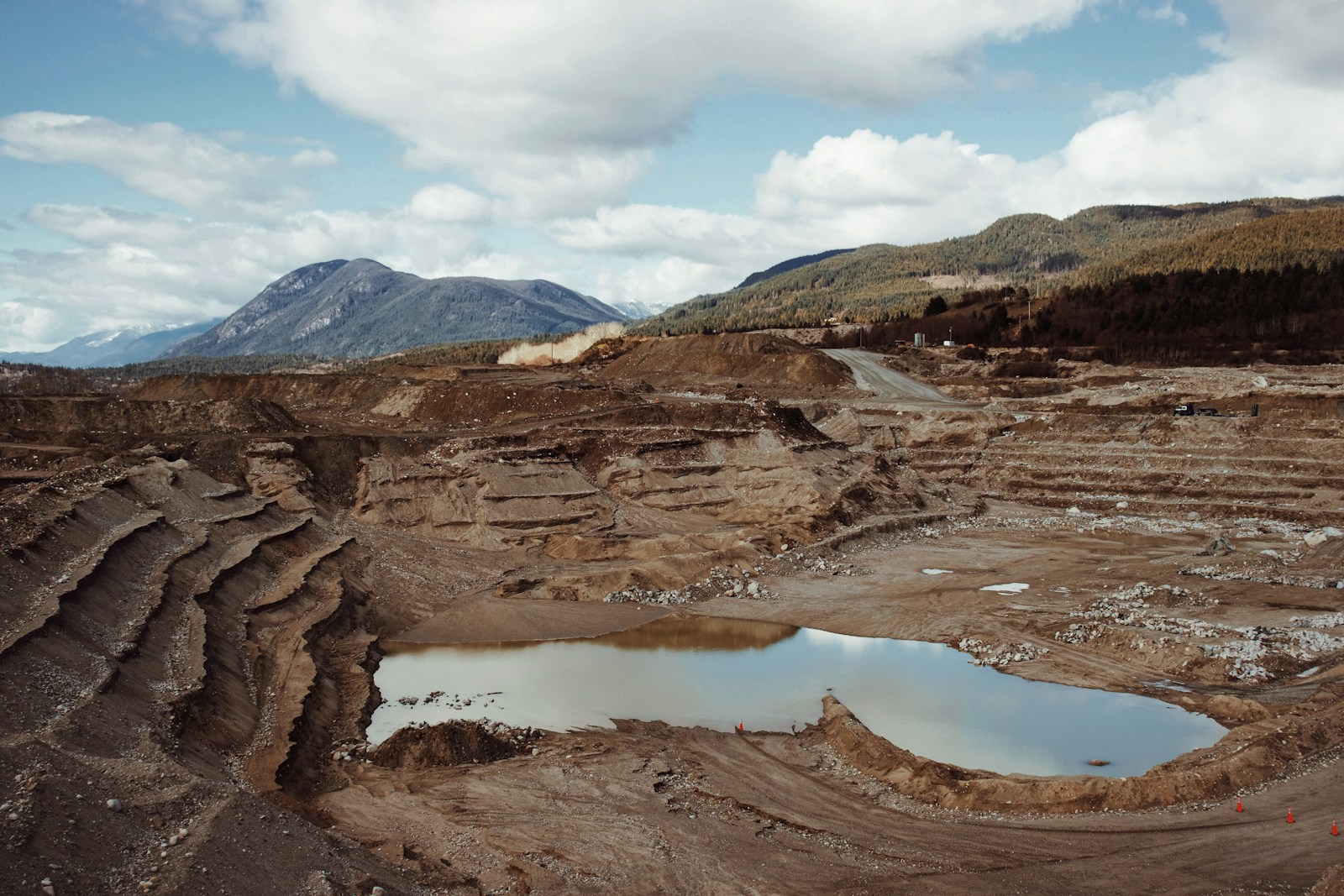
If you’ve been following the news, you may have seen the recent CBC article about a B.C. company’s proposal to open a new sand mine just north of Prince George. This story is more than just a headline-it’s a reminder of how vital the mining sector is to our region’s prosperity and future.

Mining: More Than Just Resources

Prince George has long been recognized as a hub for forestry and transportation, but mining is increasingly becoming a cornerstone of our local economy. From precious metals to industrial minerals like sand, mining operations support thousands of jobs, drive infrastructure development, and attract investment to our community.

The proposed sand mine north of Prince George is a perfect example. If approved, it could supply high-quality sand for construction projects across B.C., supporting everything from new homes to public infrastructure. The ripple effect? More local jobs, increased demand for services, and a stronger tax base that benefits everyone.

Economic Impact Close to Home

Mining isn’t just about big companies-it’s about local businesses, skilled trades, and families. Each new project means opportunities for contractors, equipment suppliers, logistics providers, and countless other small businesses right here in Prince George and Vanderhoof.

As a business owner, I’ve seen firsthand how resource development fuels economic activity. It’s not just about extraction; it’s about building communities, supporting innovation, and creating long-term prosperity.

Responsible Development Matters

Of course, growth must be balanced with responsibility. Modern mining projects in B.C. are subject to rigorous environmental assessments and community consultations. Companies are investing in cleaner technologies and working closely with Indigenous communities to ensure development is sustainable and mutually beneficial.

Looking Ahead

As Prince George continues to grow, mining will remain a key driver of opportunity and progress. Whether it’s new projects like the proposed sand mine or ongoing operations that keep our economy moving, the sector’s impact is undeniable.

Let’s celebrate and support the industries that make our region strong. Together, we can ensure that Prince George remains a vibrant, thriving place to live and work for generations to come.

Want to learn more about how mining and other industries are shaping Prince George? Connect with me on LinkedIn or visit clintdahl.ca for more insights and updates.

Feel free to personalize this post further to match your voice or add a call-to-action specific to your business services!

Read

Prince George home sales buck Provincial trend

While house sales in the Province tumbled 18.9% year over year, marking a six-year low for home sales, sales increased in the Prince George region by 2.6% year over year. 


http://bcnreb.stats.10kresearch.com/infoserv/s-v1/FJPm-WlL


The average sales price in the city has increased by 4.1% year over year and on a 12-month rolling average we are up 6.2% to an average home price of $317,740. 


http://bcnreb.stats.10kresearch.com/infoserv/s-v1/FJfo-YsR


While in larger centers with higher average home prices the tightening federal mortgage rules have limited prospective buyers purchasing power, the affordability that we have in Prince George means we are not impacted as hard. 

Read

Here is an excellent video giving an overview of the Light Industrial areas of Prince George. Some areas are very limited in what is available while others, such as the Danson Industrial site and Boundary rd have several options available for purchase.


Read

A key economic indicator I always watch are the airport passenger numbers. As we are the service center for the Central and Northern BC, its a great indicator of the how much activity is going on in the region. Numbers for May are up 6.8% over last year and that follows growth of 9% in April and 5.5% in March. Those are very encouraging signs for our economy.


May 2017 Ecdev Prince George

Read

B.C. HOME Partnership program is the new government launched fund to help first time home buyers purchase their first homes by contributing up to 50% of the down payment. This is in the form of a repayable loan but provides a fantastic opportunity for people to get out of the rental market and start building equity into their own homes!


More information can be found here:


https://housingaction.gov.bc.ca/?WT_mc_id=NEWS&WT_cg_n=HootSuite


Want help finding the perfect new home, give me a call.

Read

Kask Taproom on 4th ave in downtown Prince George opened its doors on November 18th, 2016. This new test kitchen and craft beer tasting  business is going to be a sure fire hit in our downtown and is just another example of all the great things happening in the area. 


The following is an excerpt from www.opinion250.com news report on the opening and captures what is happening beautifully:


More and more businesses are making the decision to  open  in  downtown Prince George,  an area of  the City  which has seen more than its share of  challenges.

Investment in the downtown  has been  growing,  with  façade  improvements ( the old Photo Fax building  on George Street a prime example),  the resumption of  construction of the Courtyard Marriott Hotel,  the addition of  a pizza outlet to Nancy O’s on Third Avenue,  façade improvements underway at the corner of  Third and Quebec,   the  decision by HomeWork to  return to  downtown,  the opening of  Jim’s  Clothes Closet  on 4th , the  development of  Crossroads Brewery on George Street and now Kask.

The  opening of Kask on 4th means  4th avenue   has no retail vacancy  space available.  That’s the  first time that has happened in  several years.  “This  innovative business will play a pivotal role in redevelopment of  downtown” says Mayor Lyn Hall.

Kask’s owner, Ross Birchall  says  his outlet  won’t be in competition with Crossroads Brewery, in fact,  CrossRoads product will be one of  the craft beers featured.

Over the past year,  several developers have remarked that  it is clear Prince George is open for business and Birchall  echoes those comments “The time  is right  for doing business in this  city.  A cooperative Mayor and Council, incentives such as the Façade Improvement Program,  several young entrepreneurs that I’m pleased to call my friends and an appetite for change  makes all the difference.”

There are other  plans in the works  to help  further the revitalization  of Downtown  Prince George,  including developing student housing,  and a park  next to  the  Wood Innovation and Design Building .


Kask sign

Read

Prince George is predicted to have the strongest economic growth in Canada as compared to other mid sized cities, this according to the Conference Board of Canada. The Western Investor recently released and excellent article on Prince George and overall prospects. With job numbers remaining strong, vacancies at all time lows, growth in both the K-12 and University student populations Real Estate in Prince George looks to remain healthy. 


you can read the full article here:


http://tinyurl.com/hepydwy


Read

May 2016 Real Estate statistics are out and here are some quick highlights:


The overall number of sales in Prince George was up 6.6%

The number of new listings that hit the market was down 3.4%

Overall the number of Active listings was down a whopping 16.3%!! This explains why those people that are looking for houses to buy are having some challenges. New listings that are in good condition are being sold quickly. 


The median sales price on a 12 month rolling average is up 4% to $255,000.....which still makes Prince George and amazingly affordable place to live!

Read

Statistics for April 2016 in Prince George show we continue to be in a very tight market which is great for sellers but challenging for buyers. As always a sellers market means we have upward pressure on pricing. I've used 12 month rolling average statistics in this blog as I think it shows the trends more than just viewing April 2016 vs April 2015. 


The average sales price in April 2016 was up to $266,023 compared to an average of $252,824 in April of 2015. 


The number of sales was relatively the same with 1318 in April 2015 versus 1304 this year. 


The big change was in the number of new listings. This year was down to 1777 new listings as a 12 month rolling average. Last April had an average of 1898! This means the number of Active listings for prospective buyers to choose from has declined from 422 in April 2015 to just 356 this April and that is across all price points. 


This results in a very tight market and why we are seeing competitive bids in the market place and new listings getting snapped up fast if they are priced accordingly to market conditions. 


If you have property and have been thinking of selling, now may be a good time to do it!


Read

16 Unit Apartment for Sale at $950,000 which works out to a great price of $59,375 per door. Unit has excellent suite mix with 2 bachelors, 4 one bedrooms, 8 two bedrooms and 2 three bedroom suites. All suites are good size with lots of natural light. Large laundry room, lots of parking and a very central location that is walking distance to Parkwood mall which has a Save on Foods, London Drugs, The Bay, Theatre and several restaurants. 


View video here:

Read

January Real Estate statistics are now in and the general trend of a very tight market has continued. Current active listings for the City of Prince George are at 213. The only time we have had very lisings is in January 2007 when we had 204 active listings. The number of new listings in January was also very low at just 93 new listings. Again only once have we seen a month with fewer listings and that was in January of 2006.


The median sale price for houses in the city rose year over year from $234,000 to $243,000.


The general sense in the market place is we will continue to have low inventory of houses for sale relative to past years which should continue to put upward pressure on pricing.  

Read

BC Stats recently reported that Prince George's population shrank by 2.7% last year. I was shocked then became angry when I seen this. These stats play a pretty important roll in the helth of the community. Everything from government funding to potential investors look at these stats so a declining population is bad news. But lets take a closer look at some other statistics:

Our vacancy rate for rental properties while up from last year is still extremely low.

Housing starts remain strong and the sale of new houses has remained strong. I've talked to one larger builder that said they cannot keep up with the demand. 

Our real estate market also points to anythign but a declining population. Sales remain high and we continue to see modest increases in prices, somethign you do not see in city with a declining population. Interestingly if we lost close to 3% of our population one would assume that their would be a rise in the number of houses for sale and yet we have the lowest inventory of houses for sale since 2007 and even at that its only marginally more than that boom year. Beyond that year the mls data does not show any years where we have had less houses for sale. 


While average family sizes in Canada are getting smaller, School district 57 had an increase in the number of students from 12,654 students to 12,728 students. Not a large increase but certainly not what one would expect to see if your population just shrank by 2.7%.


You don't need to look at these statistics though to see that there is something wrong with BC stats numbers, just drive around the city. There is way more traffic just about every where you go. 


The bigger problem I would suggest is that the way BC Stats is getting their data is obviously not reflecting what is actually occuring. This is concerning, because from my point of view Prince George is growing!

Read

Prince George home owners values up 6%

BC Assessment has sent out their 2016 assessments and Prince George residents can expect to see an average increase of 6%. This is slightly more than the average increase that we have seen through the nearly 1300 MLS sales this year where we have seen an average increase of about 4.2%.


Median 2014-2015 Sales Price

What will be interesting to see what the increases will be for the different price ranges. For example the average number of active listings we have in the $200,000 - $300,000 range is down by over 22% where as the number of listing in the $350,000 and up range is up by close to 15%. This shows tare fewer and fewer houses available in the range of what our average house price is. Tight inventory usually means rising prices so will we see faster price increases in that $200-300k price range this year and has BC Assessment already factored that in?

Read
Categories:   prince george