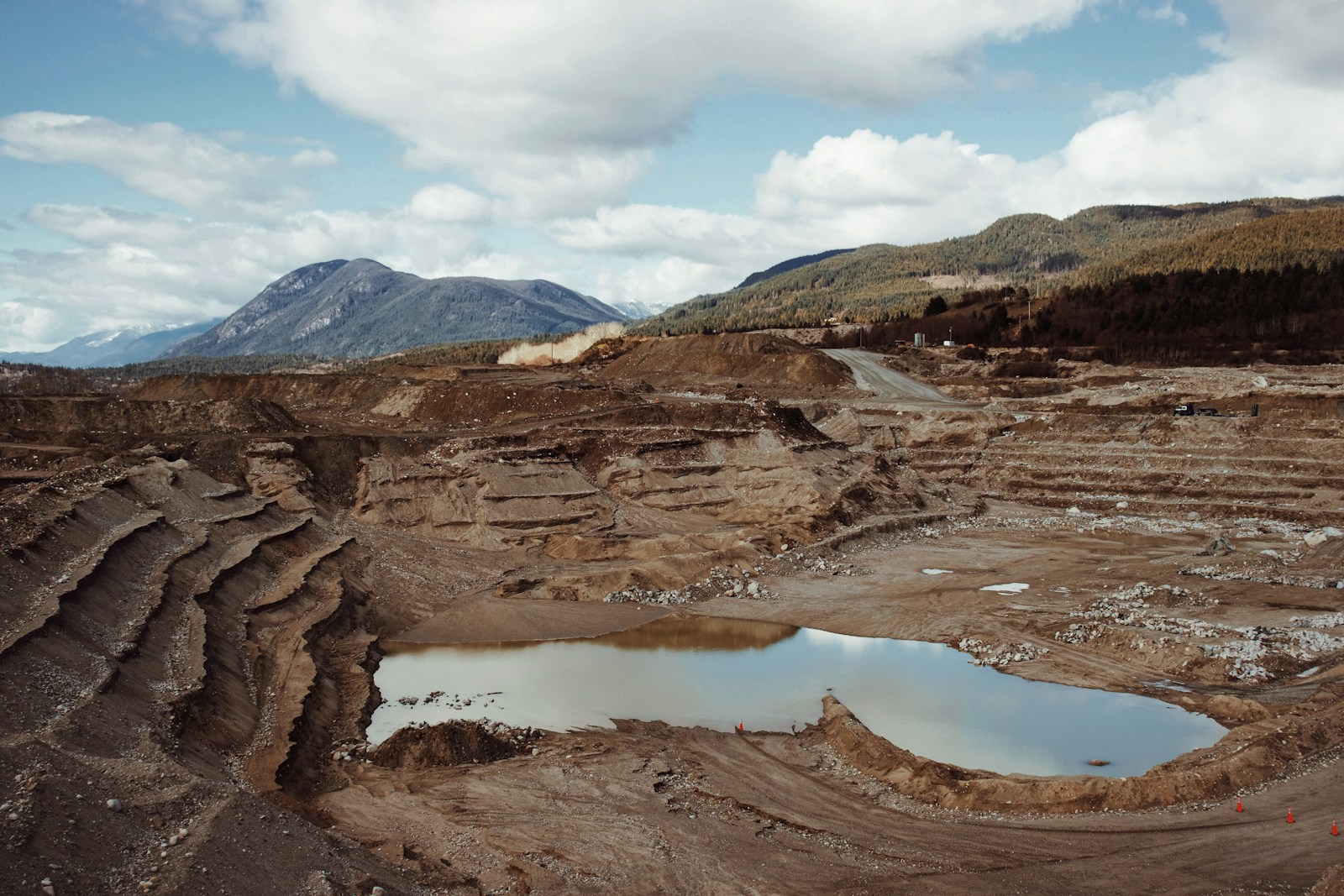
I've sold land and buildings in this region for over fifteen years, and I've never seen anything like what's lined up for the next five. A few weeks ago I sat down with every major project I could find in northern BC, the ones being built and the ones coming, and started adding up the dollars and the jobs. When I got to the bottom of the page I added it up again because I didn't believe it the first time.
Here's the short version. Thirty-three projects. About $18 billion of them are already under construction, with 5,800 construction jobs and 2,800 permanent ones. Another $20 billion or so is proposed with real numbers attached, which is another 4,200 construction jobs and 3,400 permanent. Call it 10,000 construction jobs and 6,200 permanent jobs across the North over the next five years. And that list doesn't even include LNG Canada's $33 billion second phase in Kitimat, which got signed off on September 28, or the $3 billion going into the port at Prince Rupert.
$38B in northern BC projects, underway or proposed. 10,000 construction jobs over the next five years. 6,200 permanent jobs once it's all running.
And this isn't a wish list. A lot of it is already in the ground.
What's being built right now
The transmission line is the big one and it starts in our backyard. BC Hydro's North Coast Transmission Line is a $6 billion, 500 kV line that begins at the Williston substation in Pineview, east of the airport, runs to Glenannan near Fraser Lake, then on to Terrace. Ottawa and Victoria are putting in $3.9 billion between them. Ground broke in September. The substation itself is being expanded this fall. Phase 1 is due in 2030.
The hospital tower. $1.6 billion, eleven storeys, cardiac, surgical and mental health. EllisDon is building it, main construction gets going in early 2027, patients in winter 2031. It takes capacity in those services from 102 beds to 211. That's not a camp job. Those are nurses and doctors and techs who live here.
Blackwater. Artemis poured first gold in January 2025, and in August they started on a $1.44 billion second phase that nearly triples the mine to 21 million tonnes a year. First gold from that is 2028. They have significant offices and warehouse space right here in Prince George, not only in Vancouver.
IREN is turning the old bitcoin sites in Prince George and Mackenzie into AI data centres, up to $3.8 billion between the two. Concrete is going in at Mackenzie already. Sixty people work there now and they plan to triple it.
Then Enbridge's $4 billion Sunrise gas expansion from Chetwynd south, 1,200 jobs, started in July. Mount Milligan got its permits in January to run to 2035, which locks in 574 jobs. Cariboo Gold at Wells made its construction decision in September, 613 construction jobs and 525 operating, first gold early 2029. Coastal GasLink's second phase got approved on September 29, five new compressor stations, 2,100 workers at peak, starting early next year. Red Chris is going underground.
None of that is a press release. It's permits, contracts and poured concrete. And the thing about it that matters for us is the timing. It all overlaps. The hospital, the power line, Blackwater, the compressor stations and LNG Phase 2 are all going at the same time from 2027 through about 2031. A guy working one project takes a camp bed and flies home to Alberta. A guy who can see five years of work within two hours of Prince George moves his family here. That's the whole ballgame for housing and I'll come back to it.
What's proposed
The proposed list is where it gets interesting, because half of it isn't the kind of project this region has ever had before.
The McLeod Lake Indian Band wants to build a $4 billion clean hydrogen plant and gas liquids facility on their Kerry Lake East reserve just north of town, with Mitsubishi Power as a partner. Two thousand construction jobs, 500 permanent. It's at the MOU stage with the Province, so early, but it would be the biggest industrial employer added to Prince George in my lifetime.
UNBC wants to develop about 35 acres across University Way from the campus. Roughly 1,800 homes, student housing, rentals, condos, and commercial space, a community of about 4,000 people, worth $1 to $1.7 billion at build-out and $6 to $10 million a year in city taxes. Council endorsed it in March. It's waiting on the Province.
A company called Skookum wants to build a wind tower factory on the old Canfor Isle Pierre mill site, 30 kilometres west. $136 million, 400-person construction crew, up to 300 permanent jobs, the only wind tower plant in Western Canada. Land and money aren't locked down yet. But a closed sawmill site turning into a manufacturing plant that builds towers for BC Hydro's wind farms, including the one going in at Hixon, is the kind of thing people have talked about for twenty years and never seen.
FedEx signed a lease on Boundary Road on September 10 for a facility they're calling the first of its kind in North America. Two or three planes a day from Calgary. Equipment is on site. No numbers released yet.
And then the mines. FPX's Baptiste nickel project near Fort St. James at $2.9 billion. Wicheeda rare earths at $1.4 billion, 80 kilometres northeast of town. Kemess restart at just over a billion. Berg copper near Houston at $4.7 billion. Vitreo's $300 million silica mine an hour north, which has its environmental certificate and needs a regional district rezoning. Cedar LNG and Ksi Lisims on the coast.
Here's the part that gets me. Even if you only counted what's already under construction, you'd have the biggest build this region has seen since the mills went in. Everything on the proposed list is upside on top of that.
The mining piece
I talk a lot about Prince George being second to Kamloops in mining supply spending, $237 million a year here against $377 million there, and how there's no geographic reason for that. The Mining Association's January study put the northern picture in numbers: 24 advanced projects, more than $40 billion in construction, $21 billion in paycheques, eight of the 24 in our part of the province. Their rule of thumb is a typical critical minerals mine costs about $2.3 billion, takes three years to build and runs for 19 years.
That 19 years is the number I'd circle. A pipeline build makes camps. A mine makes households. Artemis and Vitreo already have operations out of Prince George. Every time another one of those companies decides to put its office here instead of on West Georgia Street, that's a hundred or more salaried families looking for a house in College Heights or the Hart, and there isn't much for them to buy.
Why it lands here
I said I'd come back to the timing because it's the whole story. Booms up here have usually been one big project, a camp, and a lot of trucks heading back to Alberta every second Thursday. This time it's five or six at once, all within a couple of hours of town, all running through 2031. That's the kind of runway that gets people to move their families.
And a lot of this work happens right here in town. The hospital. The substation in Pineview. The data centre. FedEx on Boundary Road. The hydrogen plant at Kerry Lake. The UNBC lands. Providence Living's 200-bed care home in College Heights, opening in 2028. Industrial vacancy is already under one per cent, so the business side has clearly figured out what's coming.
Then there's the permanent jobs, which is what really moves a housing market. Something like 6,200 of them across the North once all this is running. Mine operators, nurses, surgeons, data centre engineers, plant operators. Good paycheques, the kind that buy houses. If even a third of those families land in Prince George, that's around 2,000 households, plus thousands of construction workers for four or five years on top. The city has been adding about 330 homes a year. You don't need to be an economist to see where that goes.
Where the housing market sits
Right now it's quiet. Through September we had 1,043 sales in Prince George, about the same as last year. The average detached house was $539,000. There were 838 active listings at the end of September and about six months of inventory. If you walked into this market cold you'd have no idea what's coming down the road, and that's exactly why I think this is the best buying window Prince George has had in a long time.
Rents are a different story. CMHC's average purpose-built rent went from $878 in 2019 to $1,354 last October, up 54 per cent, while house prices sat still. Vacancy was 4.3 per cent in that survey, up from 2.6. I read that as slack before the wave, not weakness. A town that absorbs thousands of construction jobs and a hospital build with four per cent vacancy won't keep four per cent vacancy for long, and the move from four to two is where rents really jump.
On the supply side the city's actually done well by provincial standards. Victoria gave Prince George a target of 1,803 homes over five years and the city beat it both years so far, 284 then 379, for 663 total. August alone had permits for 13 duplexes, 41 apartment units and 19 secondary suites against five single-family houses. Council raised heights to three storeys, dropped parking to zero for suites, approved a pre-approved design catalogue like Kelowna's, and gave three readings to HyLand's 467-unit Village on Central. The province also changed the DCC rules in January so you pay 25 per cent at permit and the rest at occupancy, which helps anybody trying to pencil a project.
But look at what's actually in the pipeline. Village on Central is phased over 10 to 15 years. The UNBC lands are a decade-long program waiting on the Province. Almost everything else is suites and duplexes on lots that already exist. There is basically no new serviced single-family land coming. And the people these projects bring, the surgeon, the mine manager, the engineer running a data centre, aren't looking for a basement suite. The city hasn't approved a new neighbourhood for that buyer in a generation. A serviced one-acre lot inside city limits is close to extinct. That's where I think the first big price move shows up.
Right now you can still buy a house in Prince George for about 60 cents of what it would cost to build it new. I don't think that lasts much longer.
Where this goes
Here's how I see it playing out. The hospital, the power line, Blackwater, the compressor stations and LNG Phase 2 roll through the next five years, and a good share of the people building and running them make Prince George home. Rental vacancy drops under two per cent. Somebody finally builds real purpose-built rental. Detached prices climb four or five per cent a year and the average house is somewhere around $650,000 to $700,000 by 2030.
And that's before the extras. If Ksi Lisims makes its call, if a couple more mining companies move their offices here, if the hydrogen plant or Baptiste gets going, Prince George becomes the fastest-growing housing market in BC per capita, with College Heights and the Hart pushing well past $750,000.
Prices here have been flat in real terms for a decade, so there's no run-up to give back. Right now you can still buy a house in Prince George for about 60 cents of what it would cost to build it new. I don't think that lasts much longer.
And for what it's worth, Statistics Canada already thinks the region crossed 100,000 people last summer, up about 10,600 since 2021, before a dollar of LNG Phase 2 was spent. The census will tell us for sure. My guess is it confirms it.
If you've got land or a building and you're trying to figure out what any of this means for you, give me a shout.
Call Clint: 250-981-2070 clint@clintdahl.ca
Clint Dahl, PREC
Commercial REALTOR® | Royal LePage Commercial
Ranked 3rd in BC and 8th nationally among 22,000+ Royal LePage agents (2024)
250-981-2070 | clint@clintdahl.ca
1625 4th Avenue, Prince George, BC


Comments:
Post Your Comment: